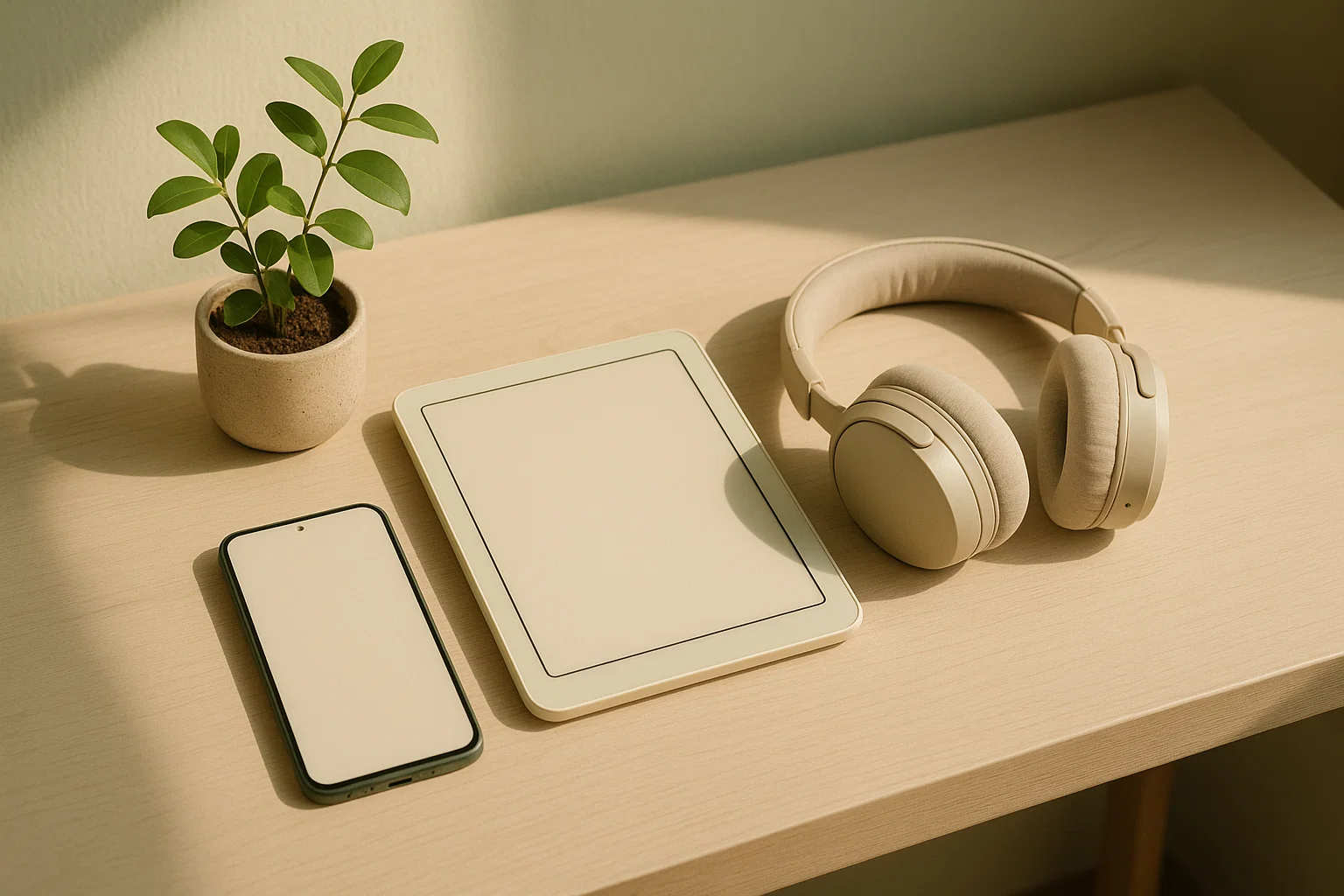
 When you think about your next device upgrade, the first thing that flashes in your mind is usually excitement that small rush you get when unboxing something new. But then another thought sneaks in, one we’ve all felt at some point: what happens to the gadget you just replaced?
It’s strange how our homes fill up with forgotten chargers, silent phones, dusty laptops, and earbuds that still work but not quite well enough. Their story doesn’t really end when we stop using them it just shifts somewhere else.
Over the past few years, people have started asking a new kind of question: How do I stay updated without creating more waste? And buried inside that question is the real one we’re finally brave enough to face how do I upgrade without harming the environment that keeps us alive?
That’s exactly what this guide to sustainable gadget upgrades is all about.
Not guilt. Not perfection. Just a kinder way to move forward with the technology we depend on every single day.
Before we go deeper, picture something simple: you’re holding your phone in your hand. It feels light, familiar, maybe even comforting. Now imagine that the next phone you buy stays with you longer, uses fewer resources, burns less energy, and eventually returns safely to the world instead of ending up in a mountain of e-waste.
Feels good, right? Let’s walk into that future slowly, one decision at a time.
WHEN UPGRADING LESS CAN GIVE YOU MORE
Most people assume sustainability is about doing without fewer gadgets, fewer updates, fewer comforts. But often, the most sustainable choice actually makes your life easier.
There’s a small moment many users describe: the old device starts slowing down, the battery drains faster, and apps feel heavy. You’re tempted to jump to a brand-new phone. But then you check the repairability score, discover the battery can be replaced for a fraction of the cost, and suddenly your device feels young again.
One gentleman I spoke to mentioned how replacing the battery on his four-year-old phone kept it running like new. The repair took 15 minutes. The battery cost less than a night out. And he skipped contributing to the 68 million tonnes of global e-waste projected for 2025.
That’s the heart of sustainable upgrading realizing that a gentle intervention often beats a fresh purchase.
LOOKING AT YOUR DEVICES THROUGH THE 7 RS
People love frameworks because they help turn complicated decisions into simple habits. You’ve probably heard about the 7 Rs of sustainable living, but seeing them through the lens of your gadgets gives them a whole new meaning.
Here’s how they translate into real choices:
Rethink Do I genuinely need this upgrade now, or is this pressure from marketing hype?
Refuse Skip accessories that only look good but add no real function.
Reduce Minimize duplicate devices. Do you need three pairs of wireless earbuds?
Reuse Pass older gadgets to family or sell them affordably. Someone’s first phone might be the one you’re done with.
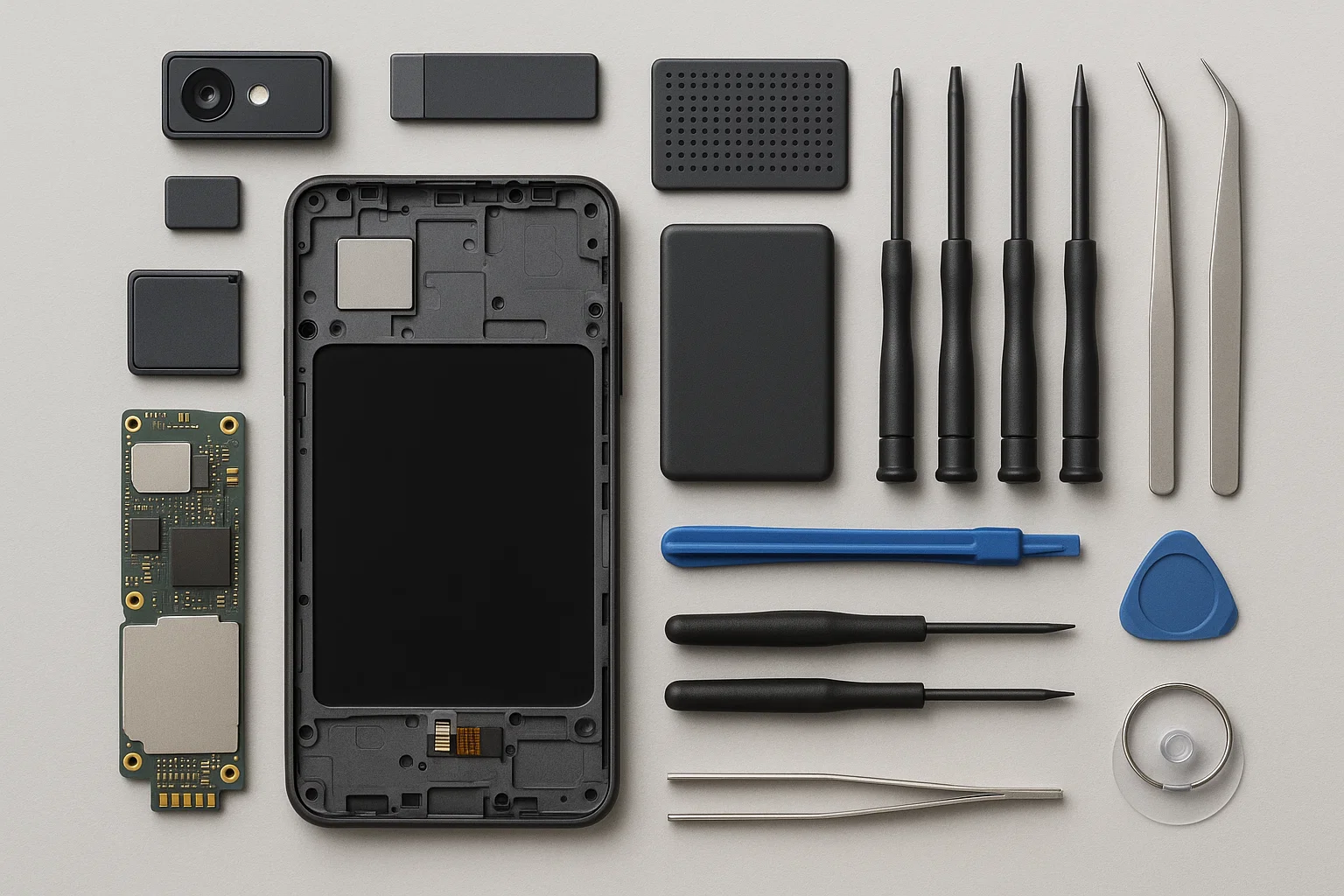
Repair The most powerful R for gadgets. Screens, batteries, ports most issues aren’t terminal.
Refurbish Trust certified refurb programs; they cut emissions dramatically.
Recycle Only as the last option. Recycling is valuable, but it’s energy-intensive.
Something shifts in your mind when you realize how often a simple repair or a careful rethink changes the path of a device. It’s not about doing everything. It’s about doing one or two things consistently.
THE GUIDING LENSES: THE 5 P’S AND THE 7 PILLARS
Sustainability frameworks can feel academic… until they suddenly make sense in your everyday choices.
The 5 P’s of Sustainability Gadget Edition
Most people know them as Planet, People, Prosperity, Peace, and Partnership. But here’s how they quietly influence your upgrades:
Planet Choose gadgets made with recycled materials or low-energy screens.
People Support brands with fair labor and honest warranties.
Prosperity A longer-lasting device saves money.
Peace Less clutter and fewer worries about e-waste.
Partnership Small communities, from repair shops to online forums, keep tech alive longer.
When your next purchase follows these 5 P’s, your home feels calmer. Your drawer of retired gadgets shrinks. Your wallet breathes easier.
The 7 Pillars of Sustainability in Tech
If you hold your new device up to the light, you’ll notice its sustainability story touches everything from its materials to its end-of-life cycle:
- Environmental health
- Economic stability
- Social wellbeing
- Cultural responsibility
- Technical durability
- Institutional transparency
- Ethical governance
You might never use these words in conversation. But you’ll feel them whenever you choose a repairable phone or a laptop that lasts seven years instead of four.
WHY SUSTAINABILITY ISN’T JUST A TREND IN TECH
For years, gadget companies pushed faster cycles new every year, new every season, sometimes new every few months. And people followed because that’s what we were taught: faster meant better.
Something changed around 2023. Users began noticing that devices weren’t getting dramatically better. Improvements shrank. Batteries stayed similar. Screens hit saturation. Cameras reached a point where only professionals could tell the difference.
Meanwhile, repair movements grew louder.
Right-to-repair laws gained ground.
Modular designs started appearing again.
And everyday people began asking: “Why replace something that still works?”
You can almost feel the shift in the air. Repair shops that once struggled now stay busy every day. Products proudly advertise “repair score: 8.2” or “battery replaceable in minutes.” Young buyers search “recycled aluminum phone” more than “fastest processor.”
It’s not nostalgia. It’s maturity a global exhale.
BEFORE YOU UPGRADE: THREE QUESTIONS TO PAUSE WITH
You’re standing in a store or scrolling online, and a sleek new device calls your name. Before you say yes, ask yourself:
- What problem am I trying to solve?
If the issue is speed or battery life, repairs usually fix it. - How long will this device last me?
Look for 5+ years of OS updates, modular parts, and easy repairs. - Where will my old device go?
If you already know a clear second life for it a sibling, a donation program, a certified refurb center you’re upgrading responsibly.
Almost every regretful purchase comes from skipping these questions.
Almost every sustainable upgrade begins with them.
HOW TO MAKE YOUR NEXT GADGET TRULY SUSTAINABLE
Let’s break this into real-world steps. No slogans. Just actions you can take today.
Step 1 Start with a Repair Mindset
Many people don’t realize that most device failures are small failures, not big ones.
A battery loses capacity.
A port stops charging.
A button sticks.
A repair extends your device’s life dramatically.
A battery swap can give you another three years.
A screen replacement is cheaper and greener than buying a whole device.
You’re not fighting against technology. You’re simply giving it another season to serve you.
Step 2 Choose Devices Designed to Last
When you do buy new, look for:
• Modular parts
• Long-term software support
• Transparent repair documentation
• Recycled metals and plastics
• Lower energy screens (like OLED or E-ink for specific devices)
One user described opening a modular smartphone for the first time. “It felt like opening a LEGO set,” he said. “Everything had a place. Everything could be lifted out without fighting glue.”
That feeling of being trusted is what sustainable tech looks like.
Step 3 Think About Energy Use, Not Just Materials
Devices consume energy long before you touch them. Mining, manufacturing, shipping, constant charging the whole chain matters.
A laptop with a power-efficient chip or a phone built on a low-energy architecture can cut your electricity use without you even noticing.
Step 4 Buy Refurbished Without Fear
Refurbished no longer means “used and tired.”
It often means:
• Fully tested
• Repaired
• Cleaned
• Updated
• Guaranteed
You save money.
You cut emissions.
You keep a perfectly good device in circulation.
A teacher from Portugal once told me she buys all her classroom tablets refurbished. “They work beautifully,” she said. “And I don’t feel guilty that we’re adding to the world’s waste.”
Step 5 Give Every Gadget a Second Life
A gadget doesn’t stop being valuable just because you stop using it.
Hand it down.
Donate it to a school.
Sell it at a fair price.
Send it to a certified recycling program.
You’d be surprised how many children learn coding on old laptops that still run perfectly.
THE RISE OF GREEN TECHNOLOGIES AND WHY THEY MATTER
This is where the topic gets exciting. The 5 green technologies shaping the next wave of sustainable gadgets include:
• Solar-integrated materials
• Low-energy processors
• Biodegradable components
• Recycled rare-earth elements
• Smart, energy-efficient manufacturing
Imagine a phone that charges itself partially through ambient light.
Or a smartwatch built entirely from recycled aluminum.
Or earbuds with biodegradable casings that don’t sit in landfills for centuries.
These aren’t distant dreams they’re already appearing in labs, early prototypes, and select product lines.
HOW SUSTAINABLE UPGRADES CHANGE THE WAY YOU FEEL ABOUT TECH
The funny thing is that once you start thinking sustainably, tech becomes more personal, not less.
You stop chasing the “annual upgrade.”
You start valuing the device that lasts.
You build a relationship with your gadgets because they actually serve you longer.
One woman told me her seven-year-old laptop “feels like an old friend.” She replaced the battery twice, cleaned the fans, updated the RAM, and it keeps going.
There’s a softness in her voice when she talks about it, the same softness you hear when people talk about things they’ve cared for shoes, tools, plants, notebooks.
That connection is something our fast-paced tech culture forgot for a while.
Sustainable upgrades bring it back.
THE EMOTIONAL SHIFT: A CALMER WAY TO UPGRADE
You start noticing how peaceful it feels when you don’t rush to replace things. Your desk becomes lighter. Your drawers hold fewer forgotten devices. The world feels less disposable.
It changes the way you view tech brands too.
You start gravitating toward companies that:
• Offer honest repair guides
• Provide long-term software updates
• Use stronger, longer-lasting materials
• Recycle responsibly
• Treat workers with dignity
It’s a small personal shift that ripples outward and suddenly you’re part of a quiet movement shaping the future.
HOW THE 7 PILLARS SHOW UP IN EVERYDAY TECH CHOICES
You won’t walk around naming them, but you’ll feel them when a company earns your trust.
Environmental health Avoiding gadgets that break too quickly.
Economic stability Saving money through longer life cycles.
Social wellbeing Choosing brands that treat workers fairly.
Cultural responsibility Devices that don’t push unnecessary consumption.
Technical durability Hardware that truly lasts.
Institutional transparency Clear right-to-repair policies.
Ethical governance Brands that don’t hide behind marketing.
The 7 pillars sit quietly behind your choices, like a compass you don’t notice until you look back.
WHERE WE’RE HEADING NEXT
Sustainability isn’t a finish line.
It’s a rhythm slow, steady, thoughtful.
And the truth is, the next few years will reshape the way we upgrade:
• More modular phones
• Repair-friendly laptops
• Eco-certified wearables
• Devices with traceable materials
• Companies proudly advertising “designed to last”
There’s a calm confidence in knowing that the next device you buy will serve you longer, harm the planet less, and eventually return to the world without leaving scars.
That’s the real future of tech not faster cycles, but kinder ones.
A SOFT LANDING TO OUR JOURNEY
As you step back from all of this, the question becomes simple:
What kind of relationship do you want with the devices you bring into your life?
A sustainable one feels lighter. Smarter. Kinder.
This whole guide to sustainable gadget upgrades isn’t about rules.
It’s about choice small, gentle, powerful choices that change how we live with technology.
Maybe that’s the upgrade we’ve been inching toward all along.

Maria Gonzalez writes about green technology and ethical innovation with a human touch. She connects science, sustainability, and daily life, helping readers see how modern tech can support both people and the planet.